How to turn your dreams into reality with AI?
How to turn your dreams into reality with AI?
Oman's Smart Rose Garden: Damascus Oil Production Reimagined
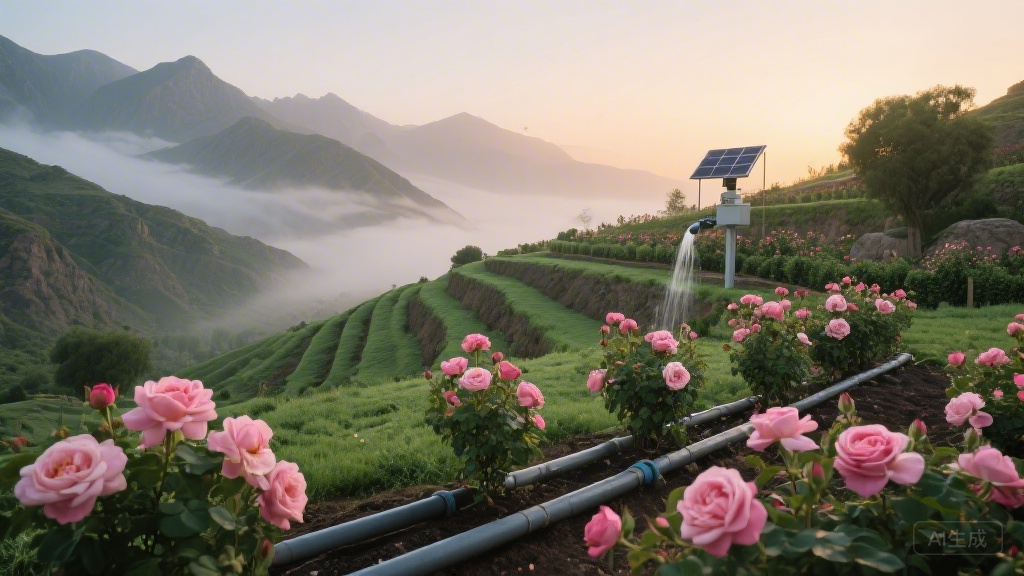
The Rose Revolution in Mountain Agriculture
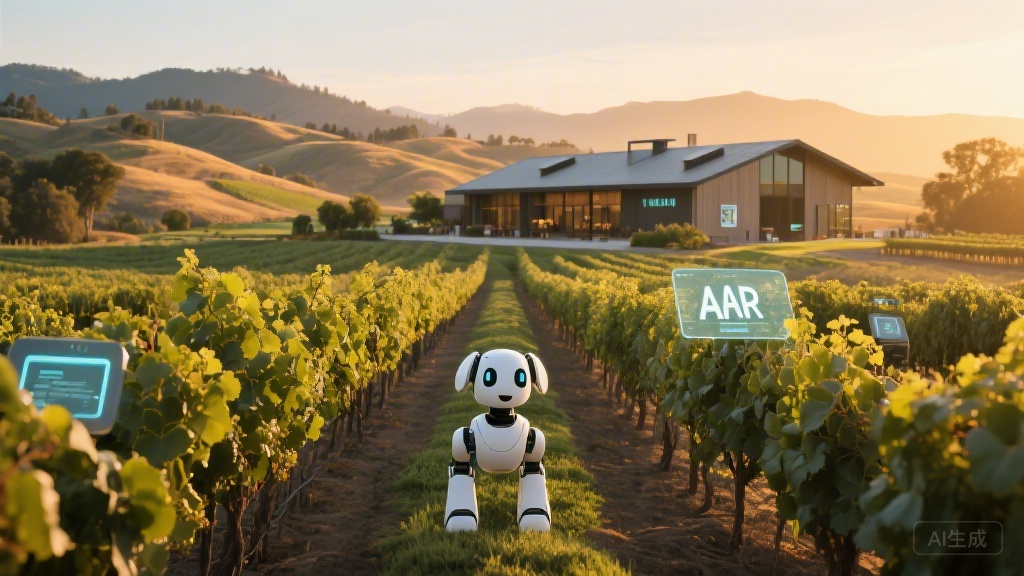
A Napa Valley vineyard owner installed AR tour guides and a farm-to-glass tasting room. Revenue jumped 340% — not from better wine, but from better experiences. The tech stack? All sourced from China at 1/5 Silicon Valley prices. Similarly transformative is this Virtual Demo Farm in Oman's Al Hajar Mountains, where ancient Damascus rose cultivation meets cutting-edge agricultural technology. This Virtual Demo Farm showcases how AI-driven irrigation and atmospheric water generation can eliminate external water dependency while boosting rose oil yields by 60-80%. Explore in 3D to see smart farming infrastructure integrated into traditional terraced cultivation.
Strategic Mountain Location: GPS Precision Farming
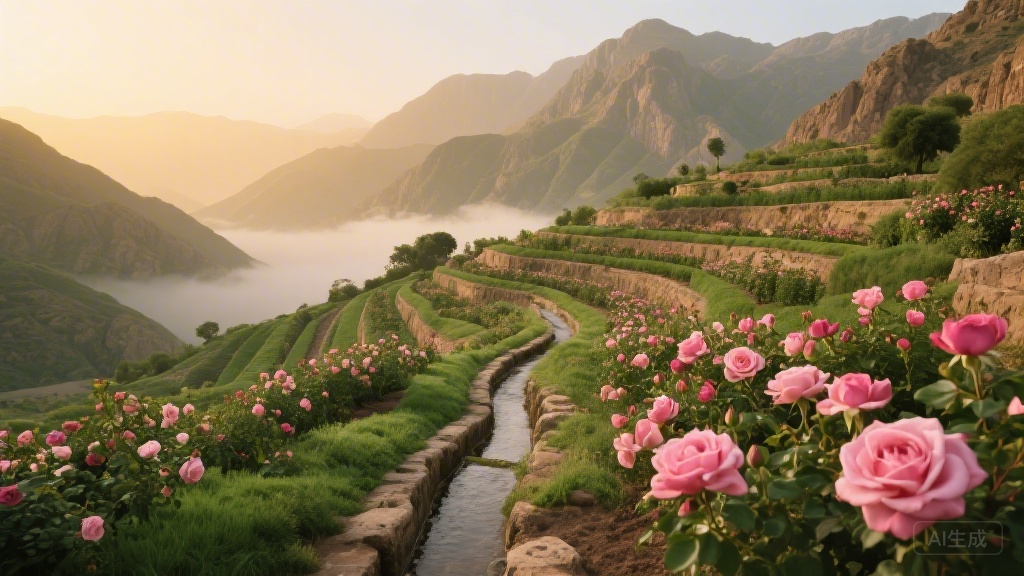
Located at coordinates 23.0789°N, 57.6612°E on Oman's legendary Jebel Akhdar (Green Mountain), this 35-hectare rose garden occupies premium altitude between 2,000-2,500 meters. The multi-point boundary spans from 23.084°N, 57.654°E in the northwest to 23.073°N, 57.656°E in the southwest, creating natural terraces that follow mountain contours. Google Maps satellite view reveals the strategic positioning: sheltered valleys that trap morning dew, southeast-facing slopes maximizing solar exposure, and proximity to traditional falaj irrigation channels now upgraded with smart sensors.
This location was specifically chosen for its unique microclimate — cooler temperatures preserve essential oil compounds, while mountain air reduces pest pressure naturally. Ancient trade routes connect to modern logistics networks through Nizwa (45km) and Muscat International Airport (180km), enabling premium oil export to European luxury markets. Explore this farm in 3D to understand how GPS-guided drip lines follow elevation gradients for optimal water distribution.
Semi-Arid Mountain Climate: Natural Advantages
The semi-arid mountain climate creates ideal conditions for Damascus rose cultivation with distinct advantages: annual rainfall of 300-400mm concentrated in winter months, temperature range from 15°C (winter nights) to 32°C (summer days), and humidity levels of 45-65% that prevent fungal diseases while maintaining soil moisture. The 35-hectare area encompasses three elevation zones: upper terraces (2,400-2,500m) for premium oil roses, middle slopes (2,200-2,400m) for bulk production, and valley floors (2,000-2,200m) for processing facilities.
Sandy-loam soils with natural drainage eliminate root rot concerns, while limestone substrates provide essential minerals for oil production. The growing season extends from October to May, with peak harvest in April-May when oil concentration reaches maximum levels. Threat level: low — mountain location naturally deters wildlife intrusion, while traditional Omani respect for rose cultivation eliminates theft concerns. Natural windbreaks and elevation changes create multiple microclimates within the single farm boundary.
High-Value Mountain Agriculture: Premium Product Selection
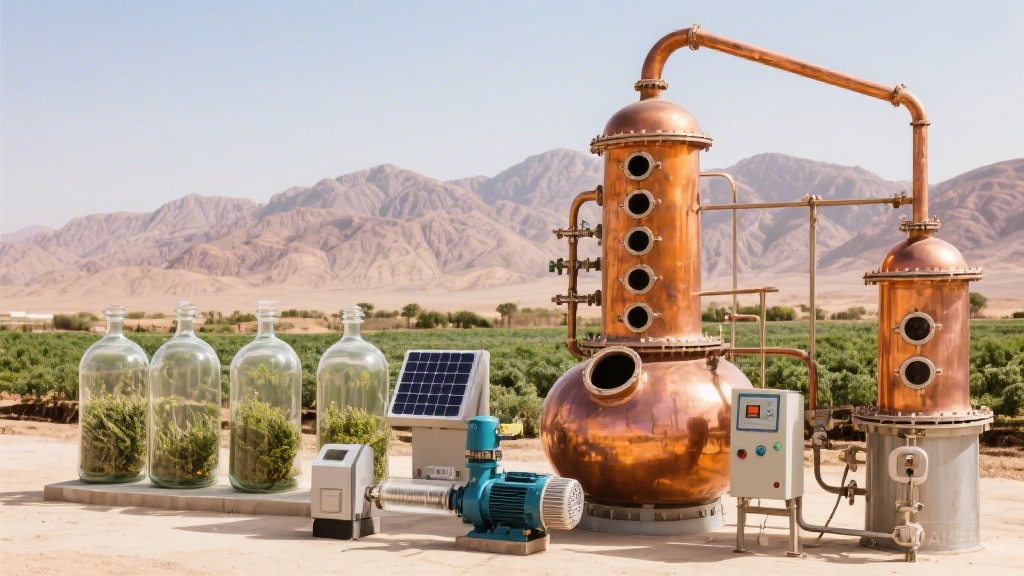
Damascus Rose Oil (Rosa damascena) commands the highest returns at $6,000-8,000 per kilogram wholesale. Expected yield: 2-3kg oil per hectare annually, requiring 4,000-5,000kg fresh petals. Target markets include French perfumery houses, Swiss cosmetics manufacturers, and Gulf luxury retailers. The altitude advantage produces oil with 40-50% citronellol content versus 25-35% in lowland cultivation.
Rose Water and Hydrosols generate additional revenue at $25-35 per liter for premium grades. Steam distillation produces 200-300 liters per hectare as co-product, capturing Middle Eastern and South Asian markets where rose water commands religious and cultural premiums.
Organic Rose Hip Oil from late-season fruits adds $180-220 per kilogram for cosmetic applications. Mountain-grown hips contain 15-20% higher vitamin C levels than valley cultivation. Dried Rose Petals for tea and culinary uses provide consistent income at $45-60 per kilogram, with food-grade certification enabling export to European organic markets.
Agritourism and Distillation Experiences capitalize on Jebel Akhdar's UNESCO World Heritage status. Premium guided tours during harvest season generate $85-120 per visitor, while hands-on distillation workshops command $200-300 per participant. The mountain location attracts high-spending tourists already visiting traditional rose terraces.
Farm Owner's Vision: Sustainability Meets Heritage
"My grandfather cultivated roses on these terraces using traditional methods," reflects the farm owner. "Today, I want to honor that heritage while proving that smart technology can make mountain farming more profitable and sustainable." The vision centers on water independence — eliminating dependence on increasingly scarce groundwater through atmospheric water generation and precision irrigation.
The owner's priorities include preserving traditional terracing while integrating modern processing facilities, creating employment for local communities familiar with rose cultivation, and establishing direct export relationships that bypass traditional middlemen. "Every drop of water, every petal harvested, should contribute to both profit and environmental protection," explains the owner, emphasizing how traditional knowledge and modern sensors can work together to optimize harvest timing and oil quality.
Current 16-Dimension Technology Assessment
powerGrid: 60/100 (intermediate) → Solar infrastructure installed, requires AI automation integration
connectHub: 60/100 (intermediate) → Satellite internet connected, needs sensor network expansion
smartFarm: 45/100 (basic) → Basic drip irrigation installed, requires AI optimization
aquaSystem: 45/100 (basic) → Water storage present, needs atmospheric generation integration
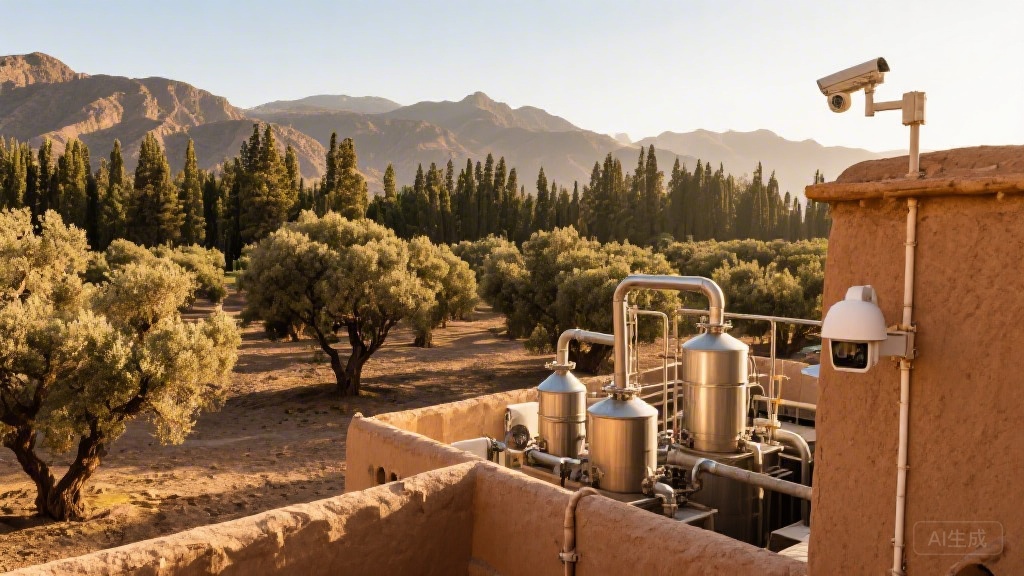
processing: 30/100 (planned) → Traditional distillation only, requires smart extraction systems
ecology: 30/100 (planned) → Organic practices begun, needs comprehensive monitoring
Overall Average: 17/100 — significant opportunity for systematic upgrade across all dimensions. The three biggest gaps requiring immediate attention: (1) Processing automation to improve oil extraction efficiency, (2) Smart irrigation systems to achieve 70% water savings, (3) Ecological monitoring to optimize soil health and pest management. Current infrastructure provides strong foundation for advanced technology integration, with power and connectivity already establishing operational baseline.
Smart Rose Garden Vision: Water-Independent Premium Production
The ultimate vision transforms this traditional rose garden into a world-class smart agriculture demonstration achieving complete water independence while maximizing premium oil production. Advanced-level upgrades would include AI-powered harvest timing optimization, atmospheric water generation producing 2,000-3,000 liters daily, and precision extraction systems increasing oil yield by 40-50%.
The Standard Deployment preset fits perfectly: comprehensive sensor networks monitoring soil moisture, ambient humidity, and oil content in real-time, solar-powered processing facilities with backup storage, and integrated export logistics tracking product from petal to perfumery. Community co-builders are contributing ideas for visitor experience integration, organic certification processes, and direct-to-consumer luxury packaging. Phase 1 focuses on water systems and smart irrigation, Phase 2 adds processing automation, Phase 3 integrates ecological monitoring and visitor facilities.
Technology Deep-Dive: IrriSmart AI Water Management
Problem Solved: Traditional rose irrigation wastes 60-70% of water through poor timing and over-application. Mountain farming cannot afford such inefficiency, especially with declining groundwater and irregular rainfall patterns.
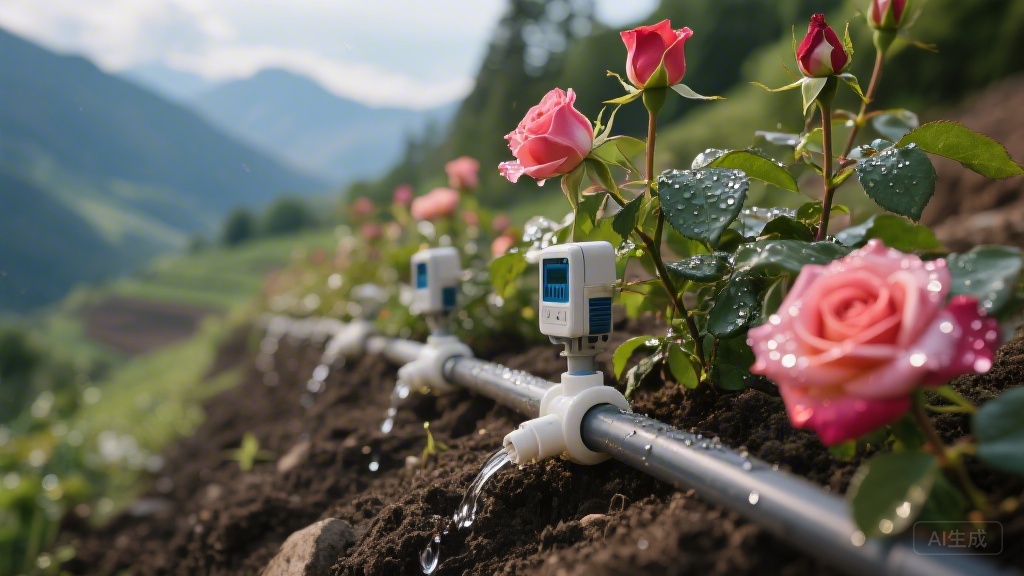
How IrriSmart Works: AI algorithms analyze real-time data from soil moisture sensors (30cm depth), weather station inputs, and plant stress indicators captured through multispectral imaging. The system calculates precise irrigation requirements for each 50m² zone, considering rose variety, growth stage, soil type, and microclimate conditions. Machine learning improves predictions based on oil quality outcomes — the system learns which moisture levels produce optimal citronellol concentrations.
Installation Process: (1) Install WeatherNode stations every 200 meters across the 35-hectare area, capturing temperature, humidity, wind speed, and solar radiation. (2) Deploy SoilSense probes at three depths (15cm, 30cm, 50cm) in representative locations across each elevation zone. (3) Retrofit existing drip lines with SmartValve controllers that receive wireless commands from the central AI hub. (4) Mount CropEye multispectral cameras on solar-powered poles for plant health monitoring. (5) Configure AI algorithms using local climate data and rose cultivation parameters.
Featured Equipment Integration: ExtractPure steam distillation systems coordinate with irrigation data — roses harvested at optimal moisture levels produce 25-30% more oil. SolarPump systems provide irrigation pressure while charging battery storage for night operations. AquaAir atmospheric water generators supplement rainfall during dry periods. SoilRevive mineralization systems add nutrients through the irrigation network based on soil sensor feedback.
16-Dimension Impact: Upgrades smartFarm from 45 to 85 points, aquaSystem from 45 to 90 points, and ecology from 30 to 70 points through precision resource management and reduced environmental impact.
AustinEco Equipment Shopping List: Mountain Rose Technology
IrriSmart AI Hub Model RS-3500: Central processing unit with 4G/satellite connectivity, handles 50-hectare coverage. China price: $2,800 vs Western $8,500. HS code: 8537.10.90. Installation: intermediate level.
WeatherNode Stations (6 units): Solar-powered meteorological monitoring with 2km range transmission. China price: $420 each vs Western $1,200. HS code: 9025.80.00. Installation: basic level.
SoilSense Probe Networks (24 units): Triple-depth soil monitoring with 5-year battery life. China price: $185 each vs Western $550. HS code: 9027.10.90. Installation: basic level.
ExtractPure Distillation System EP-2000: Steam distillation with temperature optimization and yield tracking. China price: $15,800 vs Western $45,000. HS code: 8419.20.00. Installation: advanced level.
AquaAir Generator AA-5000: Atmospheric water production 2,000L/day with solar integration. China price: $12,500 vs Western $35,000. HS code: 8421.21.00. Installation: intermediate level.
SmartTrade Integration: Global Rose Oil Supply Chain
This mountain rose garden operates as both equipment buyer and premium product supplier within AustinEco's integrated trade ecosystem. The 56-dimension matching engine connects Omani rose oil production with European luxury buyers, while the 22-node trade pipeline handles everything from Chinese irrigation equipment import to premium oil export logistics.
Equipment procurement uses HS codes 8537 (irrigation controllers), 9025 (weather monitoring), and 8419 (distillation systems) with MOQ typically 1-6 units for specialized agricultural equipment. Lead times average 15-25 days from Chinese manufacturers to Sohar Port, with Airwallex handling multi-currency payments in USD, EUR, and OMR.
Revenue generation flows through SmartTrade's premium product channels: rose oil exports (HS 3301.25.00) to French perfumeries, organic certification documentation handled automatically, and direct-buyer connections eliminating traditional trading house margins. The platform's quality verification processes ensure mountain-grown oil premiums reach international luxury markets while maintaining full traceability from petal to perfume bottle.
Take Action: Build Your Smart Rose Garden
Ready to revolutionize mountain agriculture? Three ways to start: Explore in 3D to see exactly how IrriSmart and ExtractPure systems integrate with traditional terraced cultivation. Walk through the virtual installation and understand equipment placement for maximum efficiency.
Submit your co-build ideas — our community is designing visitor experiences, organic certification workflows, and direct-to-consumer packaging innovations for mountain rose products. Your expertise in luxury markets, sustainable farming, or heritage tourism can help shape this demonstration farm's evolution.
Design your own farm using our 16-dimension configurator. Whether you're planning lavender in Provence, saffron in Kashmir, or vanilla in Madagascar, the same smart irrigation and processing principles apply. This farm is evolving — what would YOU build here?